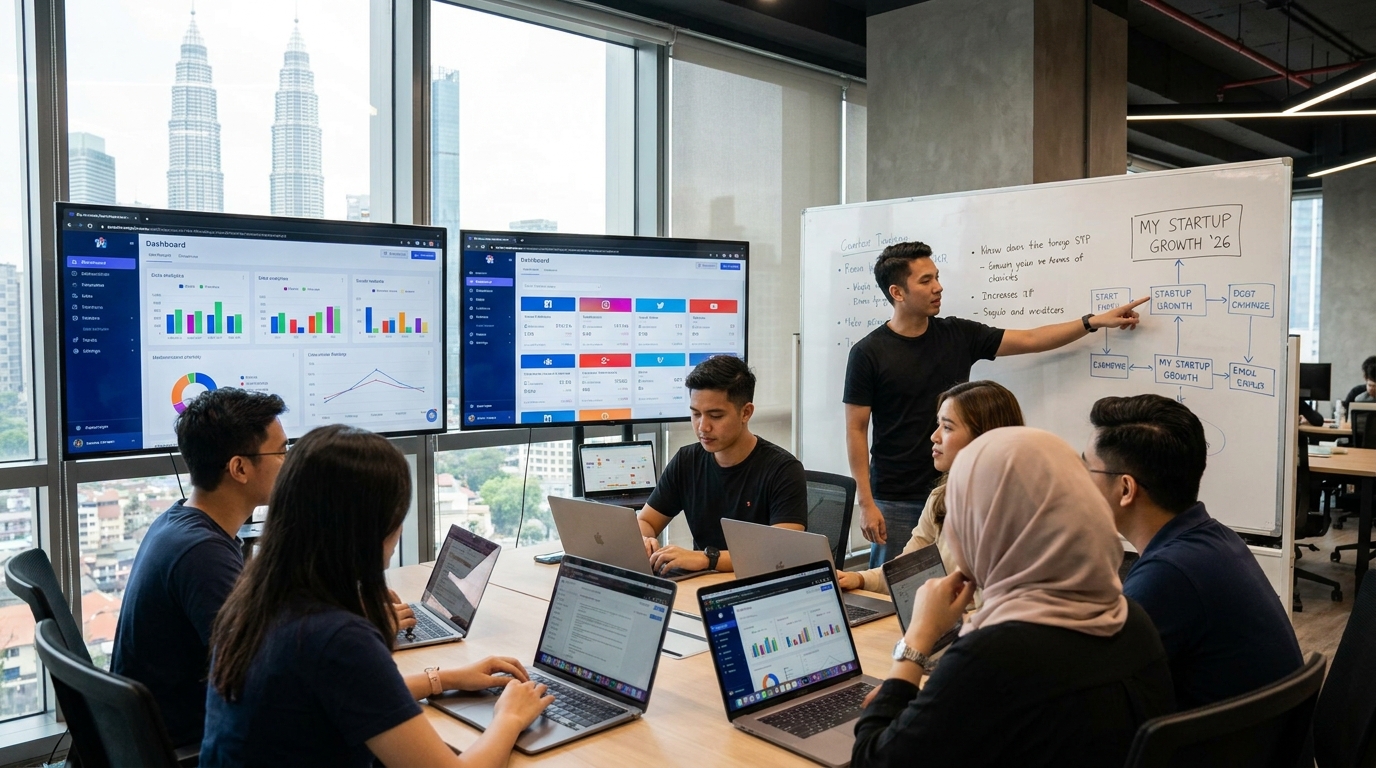
The Malaysian e-commerce scene is set to undergo a dramatic change as 2026 draws near. According to a recent report, a rise in online shopping and digital adoption is expected to propel Malaysia’s e-commerce market to RM 1 trillion by 2025. For companies wishing to create or improve their online presence, this quick expansion offers both opportunities and difficulties. Malaysian e-commerce platforms need to adjust to new web design trends that meet changing consumer preferences in order to remain competitive.
Key Takeaways
- Mobile-first design is essential to cater to Malaysia’s growing online shopping culture.
- Personalized user experiences enhance engagement on Malaysian e-commerce websites.
- Augmented reality integration allows virtual try-ons, improving customer interaction.
- Sustainable and eco-friendly design practices are becoming important in Malaysian e-commerce.
- Incorporating voice search, AI chatbots, and seamless payment methods boosts convenience and security.
The main e-commerce web design trends that are expected to influence the Malaysian market in 2026 will be discussed in this article. We will explore practical tactics that companies can use to develop interesting and productive online shopping environments, from mobile-first design to customized user experiences. Malaysian e-commerce companies can set themselves up for success in an increasingly digital world by comprehending these trends.
Adopting a mobile-first design approach is now mandatory, as more than 90% of Malaysians access the internet through mobile devices. By putting the mobile user experience first, mobile-first design makes sure that websites are optimized for touch interactions and smaller screens. Due to accessibility and convenience, consumers in Malaysia are increasingly choosing to shop on their smartphones, making this trend especially pertinent there.
Businesses should concentrate on responsive layouts that easily adjust to different screen sizes in order to implement a mobile-first design. This entails ensuring quick loading times, streamlining navigation, and optimizing images. Depending on the complexity of the website, hiring a professional web designer or using user-friendly platforms like Shopify or WordPress can cost anywhere between RM 2,000 & RM 10,000 to implement a mobile-first design. Also, companies should think about incorporating mobile payment methods like QR codes & e-wallets, which are becoming more and more popular among Malaysian customers. E-commerce platforms can increase user engagement and boost conversion rates by emphasizing mobile-first design. A key component of effective e-commerce strategies is personalization.
Customers in Malaysia are demanding more customized shopping experiences that take into account their unique tastes and habits. Businesses can develop tailored user experiences that appeal to their target audience by utilizing data analytics and customer insights. E-commerce websites can use recommendation engines, which make product recommendations based on users’ browsing and purchase history, to effectively implement personalization. Platforms with built-in product recommendation features, such as WooCommerce or Magento, can accomplish this. Depending on the platform and level of customization needed, the cost of implementing such features can vary from RM 1,500 to RM 5,000.
| Trend | Description | Expected Adoption Rate in Malaysia (2026) | Impact on User Experience | Example Metrics to Track |
|---|---|---|---|---|
| Mobile-First Design | Designing websites primarily for mobile devices to cater to the high mobile usage in Malaysia. | 85% | Improved accessibility and faster load times on mobile devices. | Mobile traffic %, Bounce rate on mobile, Mobile conversion rate |
| AI-Powered Personalization | Using AI to tailor product recommendations and content based on user behavior. | 70% | Higher engagement and increased sales through personalized experiences. | Click-through rate, Average order value, Repeat purchase rate |
| Voice Search Optimization | Optimizing e-commerce sites for voice queries, popular with Malaysian users using smart assistants. | 50% | Enhanced convenience and faster product discovery. | Voice search traffic %, Search conversion rate, Average session duration |
| Augmented Reality (AR) Shopping | Allowing customers to visualize products in real-world settings via AR features. | 40% | Increased confidence in purchase decisions and reduced returns. | AR feature usage rate, Conversion rate from AR users, Return rate |
| Minimalist & Clean UI | Simple, clutter-free design focusing on usability and fast navigation. | 75% | Improved site speed and easier product discovery. | Page load time, User satisfaction score, Navigation drop-off rate |
| Local Payment Integration | Incorporating popular Malaysian payment methods like e-wallets and online banking. | 90% | Smoother checkout process and higher payment success rates. | Payment success rate, Cart abandonment rate, Average transaction value |
| Sustainability & Eco-Friendly Design | Highlighting sustainable products and eco-conscious branding. | 35% | Attracts environmentally conscious consumers and builds brand loyalty. | Sales of eco-friendly products, Customer feedback, Brand sentiment |
Also, customized email marketing campaigns have the potential to greatly increase client interaction. Businesses can send tailored promotions & product recommendations that increase conversions by segmenting email lists according to consumer behavior and preferences. Depending on the size of the subscriber list, the annual cost of investing in email marketing tools like Mailchimp or Klaviyo can range from RM 500 to RM 2,000. Customers’ online interactions with products are being completely transformed by augmented reality (AR).
Customers can virtually try on products before making a purchase in Malaysia, where the fashion and beauty industries are flourishing, thanks to the integration of augmented reality technology into e-commerce websites. Both customer satisfaction and return rates are improved by this immersive experience. Businesses can work with AR development firms or use already-existing AR platforms like Shopify AR or Augment to implement AR features. Depending on the number of products involved and the complexity of the implementation, integrating AR technology can cost anywhere from RM 5,000 to RM 20,000.
Also, advertising augmented reality features on social media platforms can draw in tech-savvy customers who are keen to try new shopping experiences. Malaysian e-commerce sites can stand out from rivals and produce unique shopping experiences that increase sales by utilizing augmented reality technology. Adopting sustainable & eco-friendly design principles is becoming more crucial for Malaysian e-commerce companies as consumer awareness of the environment rises. Customers are more inclined to support companies that show a dedication to sustainability in their business practices and website design.
Businesses can concentrate on promoting digital products that cut waste and using sustainable materials for packaging in order to adopt eco-friendly design practices. Also, it’s critical to optimize website performance to cut down on energy usage. This can be accomplished by using effective coding techniques & reducing the size of images. Implementing sustainable practices can cost anywhere from RM 1,000 for basic optimizations.
Also, emphasizing sustainability initiatives on the website may appeal to customers who care about the environment. This can involve sharing anecdotes about sustainable sourcing methods or exhibiting eco-friendly certifications. Malaysian e-commerce sites can increase brand loyalty and draw in an increasing number of environmentally conscious customers by matching consumer values regarding sustainability. As voice-activated gadgets and smart speakers proliferate, voice search is becoming a crucial component of online shopping.
Adding voice search functionality to e-commerce websites can improve user accessibility & convenience in Malaysia, where digital literacy is growing. Businesses can optimize their websites for natural language processing (NLP) by concentrating on long-tail keywords and conversational phrases that customers are likely to use when searching for products in order to implement voice search functionality. Depending on the degree of SEO experience needed, voice search optimization can cost anywhere from RM 1,000 to RM 3,000. AI chatbots can also improve user engagement and offer immediate customer support when integrated into e-commerce platforms.
Chatbots can help consumers with order tracking, product questions, and even tailored suggestions based on browsing habits. Depending on how complicated the chatbot system is, the cost of deploying AI chatbots can range from RM 2,000 to RM 10,000. Malaysian e-commerce companies can increase customer satisfaction and simplify the shopping process by utilizing voice search and AI chatbots.
Providing a range of payment options is essential in Malaysia’s diverse market to accommodate varying customer preferences. In addition to improving user experience, seamless payment methods lower cart abandonment rates. Credit/debit cards, online banking transfers, e-wallets like GrabPay and Touch ‘n Go Wallet, and cash-on-delivery (COD) are common payment methods in Malaysia. Businesses should collaborate with reputable payment gateways that support a variety of payment methods, like Stripe or PayPal, to establish seamless payment methods.
Depending on the platform, integrating these payment gateways normally costs between RM 1,500 and RM 5,000. Also, establishing a safe checkout procedure is crucial for gaining clients’ trust. Payment Card Industry Data Security Standards (PCI DSS) compliance and SSL certificate implementation are essential measures for protecting consumer data during transactions. An annual investment of RM 500 to RM 2,000 could be made in security measures. Malaysian e-commerce platforms can boost customer confidence and increase sales by offering a variety of payment options & guaranteeing safe transactions. In Malaysia, social media platforms are becoming more and more popular among consumers who use them to find products and make purchases.
Businesses can effectively capitalize on this trend by incorporating social commerce features into their e-commerce websites. Businesses should think about incorporating social media sharing buttons on product pages to encourage customers to share their purchases with friends and followers in order to take advantage of social commerce. Also, using shoppable posts on Facebook and Instagram can increase traffic to product pages. Depending on the degree of integration needed, social commerce feature implementation could cost anywhere between RM 1,000 and RM 3,000.
Also, using social media to interact with consumers can promote brand loyalty & community building. Using influencer partnerships or live shopping events can generate product buzz and boost sales on social media. Malaysian e-commerce companies can improve their online visibility & establish meaningful connections with customers by utilizing social commerce features. Prioritizing website security and privacy is crucial for Malaysian e-commerce companies as cyber threats continue to change.
When they shop online, customers are becoming more worried about privacy concerns and data breaches. Strong security measures not only safeguard consumer data but also increase brand trust. Businesses should use SSL certificates to encrypt user-to-website data in order to improve website security.
Another important way to avoid vulnerabilities is to update software & plugins on a regular basis. Basic security measures can be implemented for between RM 500 & RM 2,000 a year. Also, giving customers clear privacy policies that describe how their data is gathered and utilized can boost their trust. Also, companies ought to think about providing two-factor authentication (2FA) as an extra security measure for account logins. Malaysian e-commerce platforms can protect consumer information and build brand trust by emphasizing website security and privacy measures.
In e-commerce, user experience and conversion rates are significantly impacted by website speed. Slow-loading websites can result in high bounce rates & lost sales opportunities in Malaysia’s fast-paced digital environment. Improving overall performance and customer retention depend on optimizing website speed.
Businesses should concentrate on optimizing images by reducing file sizes without compromising quality in order to speed up their websites. By distributing content across several servers worldwide, content delivery networks (CDNs) can also improve loading times. Depending on the degree of optimization needed, the cost of putting speed optimization techniques into practice could be between RM 1,000 and RM 3,000.
Also, identifying areas for improvement can be aided by routinely tracking website performance with tools like GTmetrix or Google PageSpeed Insights. Malaysian e-commerce platforms can offer a smooth shopping experience that keeps customers interested by proactively resolving speed issues. Adopting cutting-edge web design trends will be essential for Malaysian e-commerce companies hoping to prosper in a cutthroat market in 2026. These trends, which range from mobile-first design to customized user experiences and sustainable practices, provide practical tactics that can improve online shopping experiences & boost sales.
Businesses can develop engaging platforms that appeal to contemporary consumers by investing in technologies like augmented reality and AI chatbots while giving security and website performance optimization top priority. Success in the constantly changing e-commerce landscape will depend on staying ahead of these trends as digital adoption in Malaysia continues to rise. In conclusion, in order to stay competitive in a world that is becoming more and more digital, Malaysian e-commerce companies need to be proactive in implementing these web design trends. By doing this, they will not only satisfy customers but also establish themselves as market leaders in Malaysia’s thriving e-commerce sector.
As e-commerce continues to evolve in Malaysia, staying updated with the latest web design trends is crucial for businesses looking to enhance their online presence. For insights into how artificial intelligence can play a pivotal role in shaping these trends, you can explore the article on AI-Powered Web Design Tools Malaysian Businesses Should Use Now. This resource provides valuable information on tools that can help businesses create more engaging and user-friendly e-commerce websites in 2026.
FAQs
What are the key e-commerce web design trends to watch for in Malaysia in 2026?
Key trends include mobile-first design, AI-powered personalization, voice search optimization, augmented reality (AR) integration, minimalistic layouts, fast loading times, and enhanced security features tailored for Malaysian consumers.
Why is mobile-first design important for Malaysian e-commerce websites in 2026?
Mobile-first design is crucial because a significant portion of Malaysian shoppers use smartphones to browse and purchase online. Optimizing for mobile ensures better user experience, higher engagement, and improved conversion rates.
How does AI personalization improve e-commerce websites in Malaysia?
AI personalization helps tailor product recommendations, content, and promotions based on individual user behavior and preferences, leading to increased customer satisfaction and higher sales.
What role does augmented reality (AR) play in Malaysian e-commerce web design?
AR allows customers to virtually try products before buying, enhancing confidence in purchases and reducing return rates. This technology is gaining popularity in sectors like fashion, furniture, and cosmetics in Malaysia.
How can e-commerce websites in Malaysia optimize for voice search in 2026?
Websites can optimize for voice search by using natural language keywords, creating FAQ sections, and ensuring fast loading speeds, as more Malaysian consumers use voice assistants for shopping queries.
What security features are essential for Malaysian e-commerce websites?
Essential security features include SSL certificates, secure payment gateways, two-factor authentication, and compliance with Malaysia’s Personal Data Protection Act (PDPA) to protect customer data.
Why is website loading speed critical for e-commerce success in Malaysia?
Fast loading speeds reduce bounce rates and improve user experience, which is vital in Malaysia’s competitive e-commerce market where consumers expect quick and seamless browsing.
How can minimalistic design benefit Malaysian e-commerce sites?
Minimalistic design reduces clutter, making navigation easier and focusing attention on products, which can lead to higher conversion rates and a more professional brand image.
Are there any cultural considerations for e-commerce web design in Malaysia?
Yes, incorporating local languages (Malay, English, Chinese, Tamil), culturally relevant visuals, and payment options popular in Malaysia (like e-wallets and online banking) can enhance user engagement and trust.
How important is social media integration for Malaysian e-commerce websites?
Social media integration is very important as Malaysians are active on platforms like Facebook, Instagram, and TikTok, which can drive traffic, enable social shopping, and improve customer interaction.